What is it that elevates this creativity from a ‘building’ to a ‘piece of architecture’, asks Regine Kandan.
And what elevates an individual building to a place, with a unique, cherished, and joyous sense of its own space and character? In our pursuit of creative buildings and places, at times we forget the narratives of spaces and why we are drawn to such places, why we remember them, and why we care.
The phenomenology and genius loci of a place have long been understood as creating a connection between people and their built environment, but there is perhaps something else: that of belonging, of ownership, of mystery and of wonder.
All the above are intangible, but the common thread between them is that they come from the tangible – the architecture, the spaces it creates. These are the places with hidden narratives where the building’s history, artefacts, anthropology and archaeology have been shrouded by neglect, ignorance or camouflage, often trapped beneath layers of modernity.
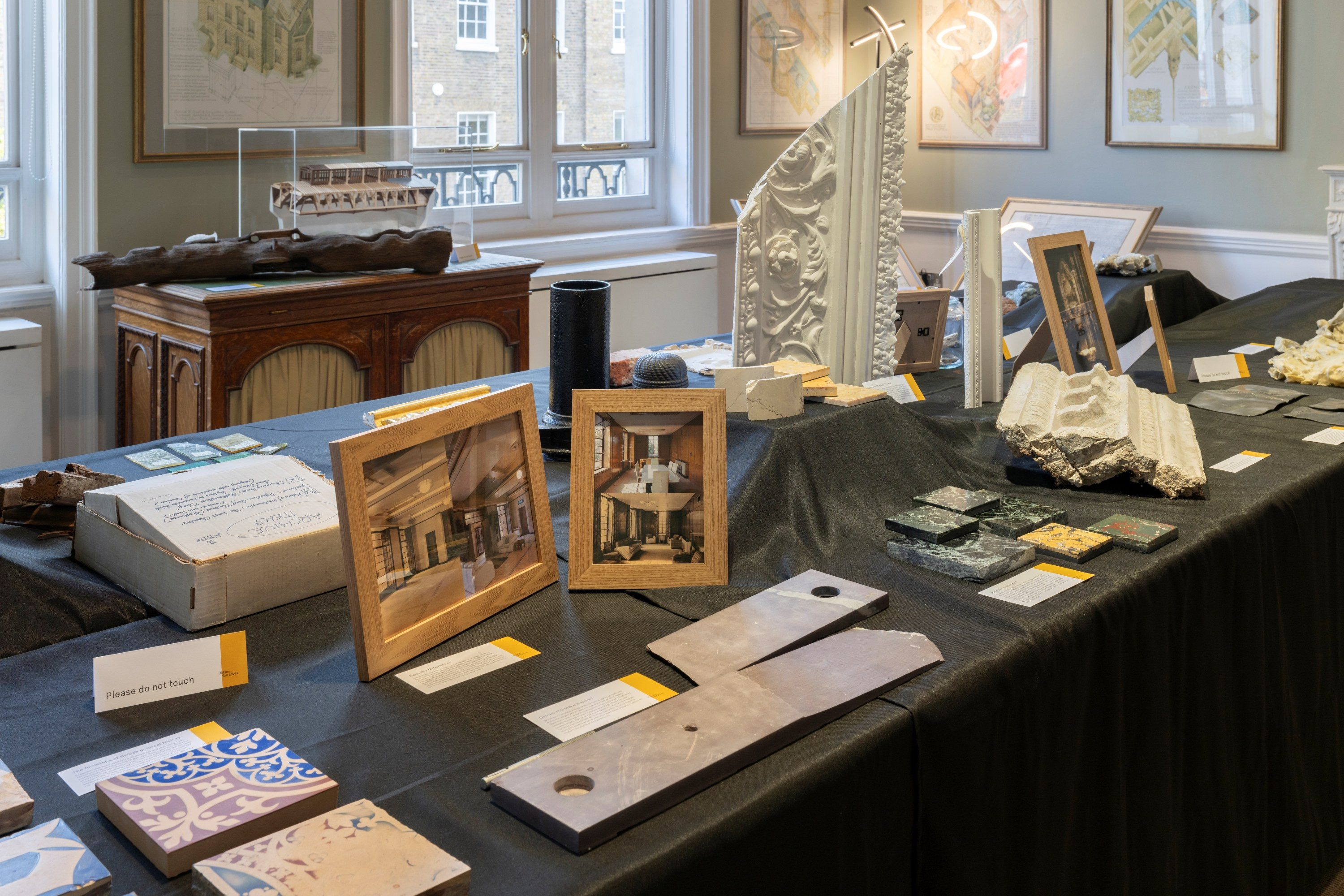
The following artefacts were a part of our Open House Hidden Narratives exhibition, inspired by the thorough examination and research our architects and consultants carry out daily, discovering unexpected narratives that are woven into a building or place. The exhibition and this piece are led by our curatorial lead, associate Regine Kandan.
-
I
.png)
Encaustic tiles were used in the medieval era and revived by 19th-century Gothic architects. AWN Pugin, with hi typical zeal, worked with Herbert Minton to enable a higher volume production of increasingly complex tiles. These tiles were made by Thomas Minton & Sons, for the Palace of Westminster.
-
II
.png)
A plaster maquette prepared by conservation carpenters to demonstrate the approach to repairing missing cusps to the medieval oak roof of Westminster Hall.
-
III
.png)
Glass has always been a magical substance, being both solid and transparent, a veil and a window. 16th-century metaphysical poet George Herbert expressed this in his poem 'The Elixir'.
-
IV
.png)
Lincrusta was introduced in the mid to late 19th century. This is formed of layers of paper pressed in a mould, then glued to the ceiling. This specimen was collected while refurbishing a listed apartment in central London.
-
V
.png)
This rubber material was used to clean Westminster Hall, in a decade-long conservation project. It became clear that repair work was necessary when pieces of oak vaulting fell from the lantern during an orchestral rehearsal. The delicate joinery needed to be strengthened to ensure its survival.
-
VI
.png)
A sample of late medieval brick found behind a 17th century wall at The Grade II*-listed All Saints Church Edmonton
How can we embrace hidden narratives?
These are just some of many examples of how the tangible and intangible have intertwined to create places for human connection. And of course, what greater connection can one have, but to the history of a place, and its heritage?
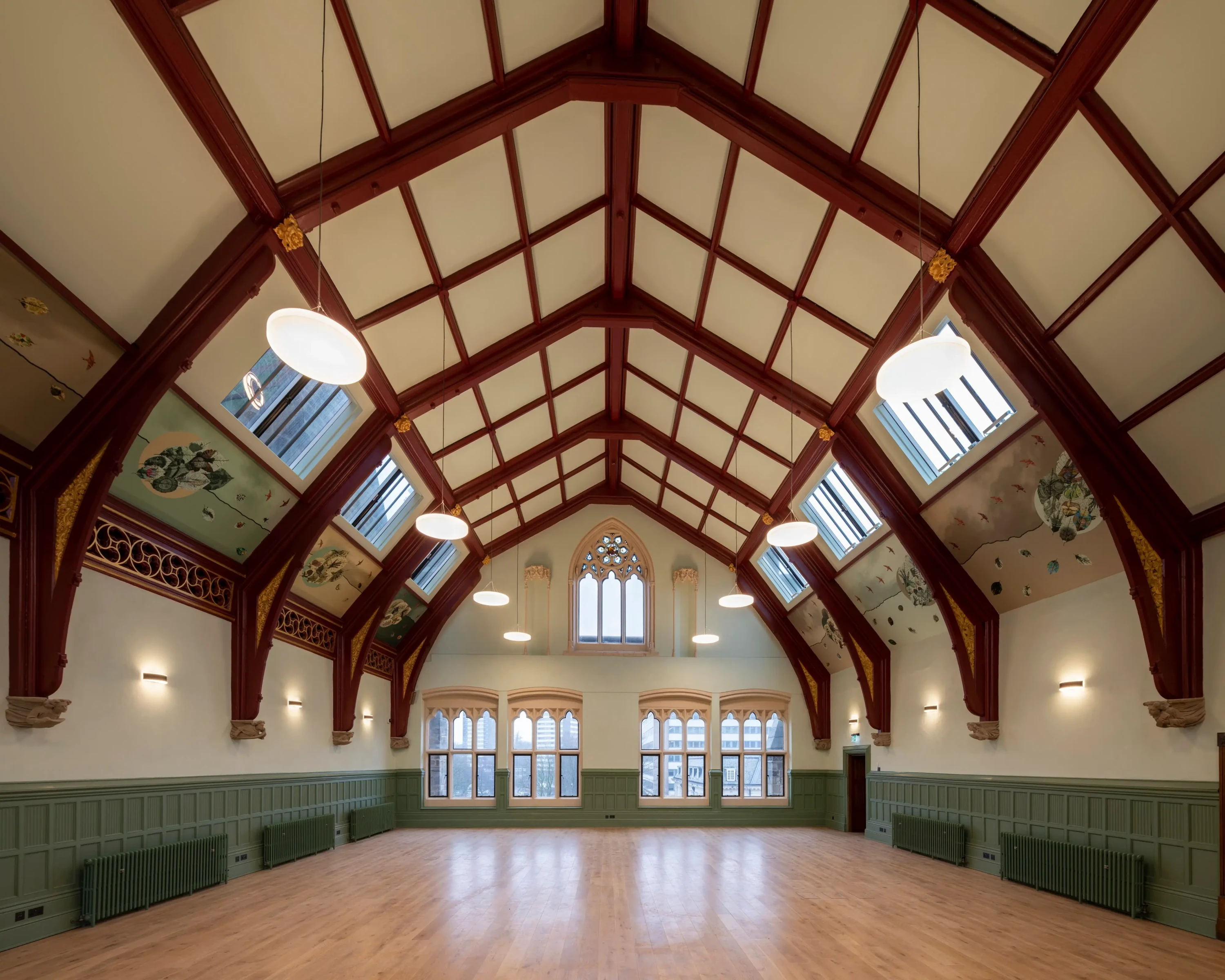
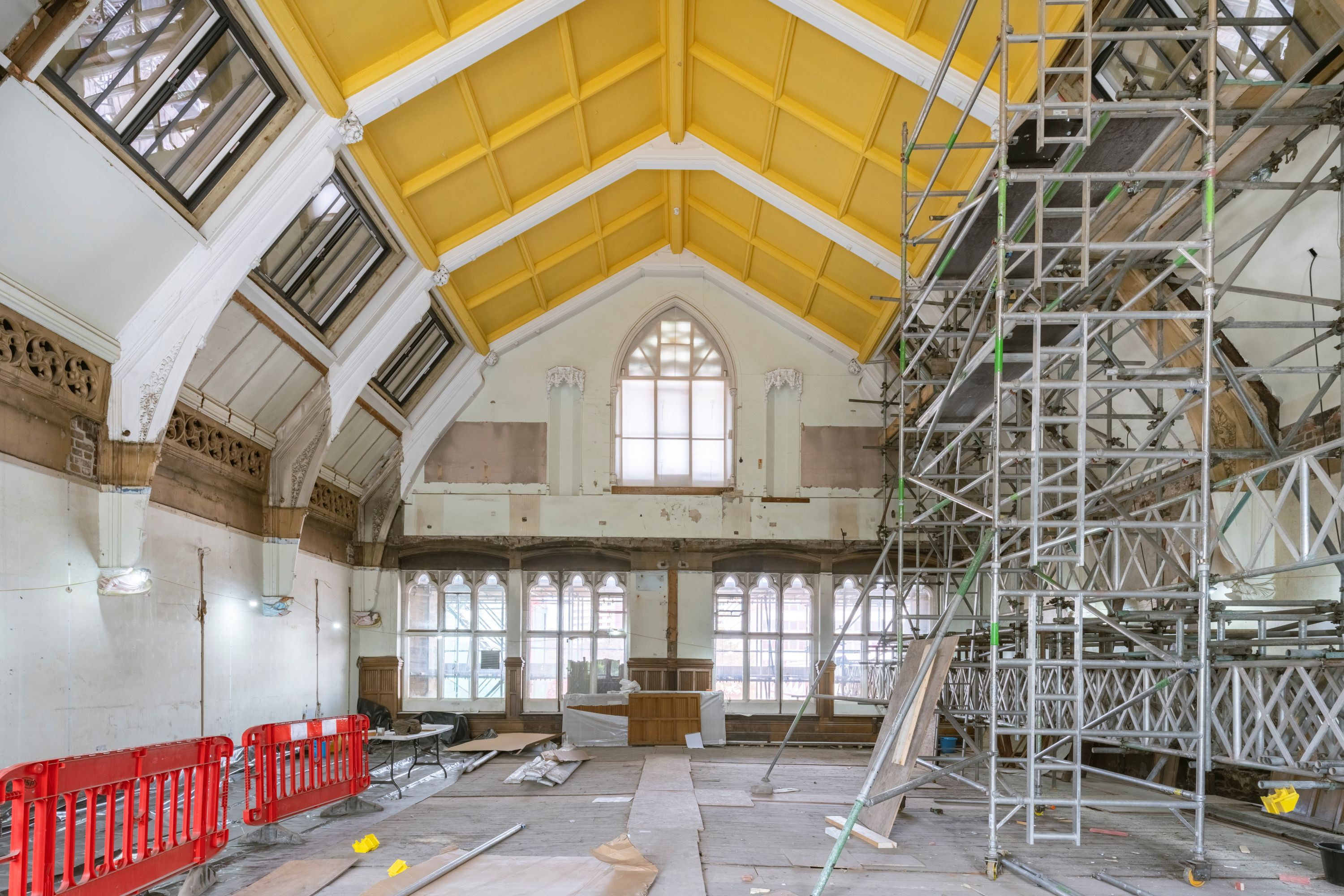
Buildings for communities need to be reconnected with those communities in order to create an even deeper connection with their place. Local volunteers helped restore the Great Hall at Rochdale Town Hall and contributed new artwork in the Bright Hall, making their mark on the already significant history of the building. In Hornsey Town Hall we worked in collaboration with Make to peel away layers of late 20th century additions to reveal and revive exquisite 1930s Art Deco interiors.
Continuing to welcome unexpected stories
William Morris described this activity as ‘stewardship’ of historic buildings, merely looking after them for the next generation. We certainly are the guardians of these historic buildings, but we are so much more than that: champions of them and their history; highly skilled technical interventionists, making their fabric better; conservationists and historians who delight in teasing out their history and what makes them significant.
We are at the forefront of active change, not just prolonging the lives of these buildings and giving them a better future, but telling their lost stories and reuniting the tangible with the intangible. We painstakingly study them, we repair the broken pieces, we revive what has been lost and we reveal what has been forgotten. We restore the sense of place.